FAULT LINE LEDGERFAULT LINE LEDGER
Read the drawer, not the lobby
From Lehman's $50.38 billion vanishing debt to Enron's guessed profits.
Twelve accounting moves behind famous collapses, from Enron's mark-to-market to CMS Energy's round trips, each explained with a lemonade stand first and a balance sheet second. Tied to the real company and the real dollar amount. No finance degree, no filings.
Instant 69-page PDF. Secure checkout. All sales are final.
First edition, checked November 15, 2026. Buyers get later editions free.
Not ready? Get the free 12 warning signs checklist.
The four seconds they skip
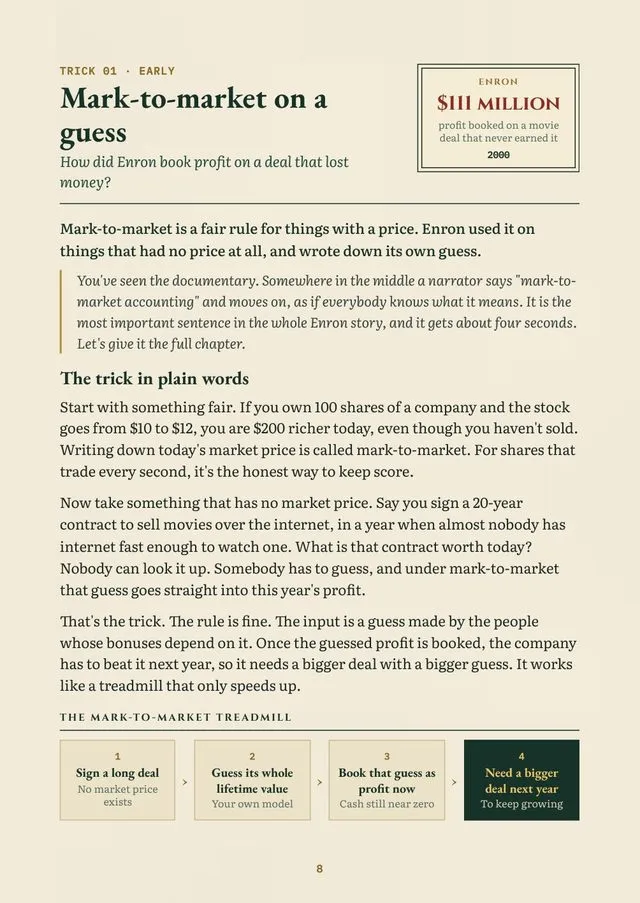
You know the scene. The narrator says "mark-to-market accounting" or "off-balance-sheet partnerships", and the film cuts to a courtroom. That sentence is the reason the company fell, and it goes by faster than the opening credits.
A lot of you said the same thing in different words. You don't want more drama. You want the move itself, in plain numbers, so the next time a company collapses and everyone at work is talking about it, you're the one who can say what actually went wrong.
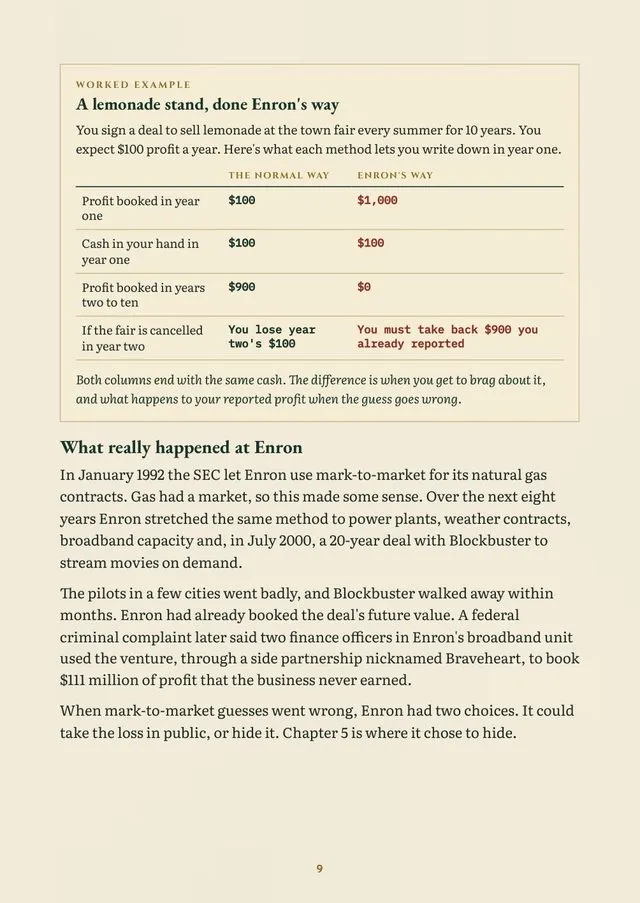
That's this book. Each of the twelve tricks gets its own chapter. First a lemonade stand or a single garbage truck, with every number shown. Then the real company, the real dollars, why nobody stopped it, and two sentences you can say out loud at the table.
Lehman Brothers made $50.38 billion of debt vanish from one quarter's report. The book that explains how is $27.
A free lesson from Chapter 9
Two companies sell each other the same thing, at the same price, at the same moment. Nobody earns a cent. Both report more revenue. Here's the method for seeing through it, which works on any company: net it out.
| Real lemonade sales | $500 |
| Same $200 jug sold back and forth with the stand next door, ten times | +$2,000 |
| Revenue reported | $2,500 |
Looks five times bigger than last summer.
| Sales to a partner you also bought the same amount from | −$2,000 |
| Profit from those trades | $0 |
| Real revenue | $500 |
Strip out the trades that went both ways, and the real size is left.
That's the whole trick. In 2000 and 2001, the SEC said, CMS Energy's round-trip trades in electricity and gas added $5.2 billion to its revenue, with $4.2 billion of it in the first nine months of 2001 alone, over a third of that year's revenue. The book shows how it was done, why the auditors let it run, what it looks like in an annual report, and the same move at the stands next door.
What's inside
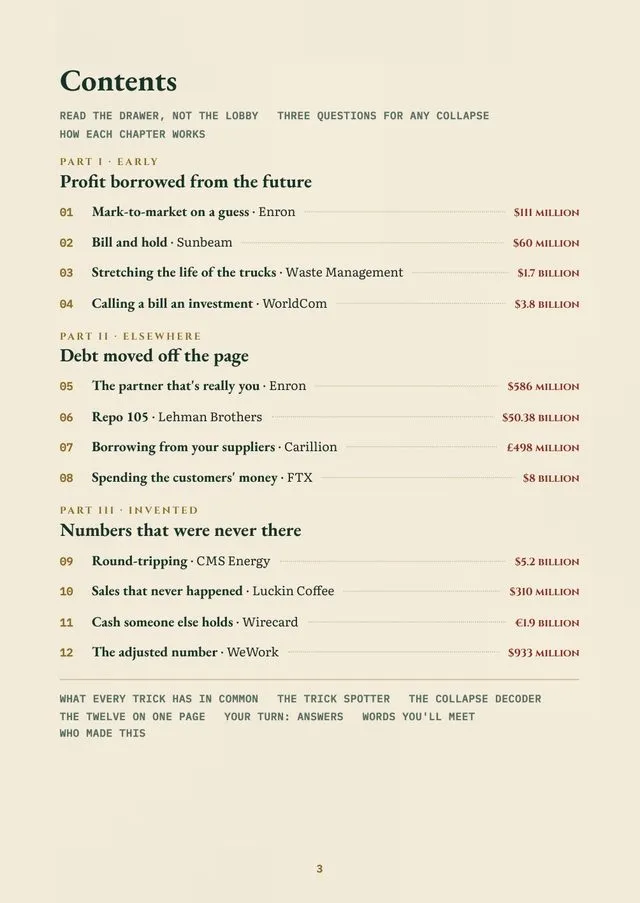
Every trick does one of three things to a number. It pulls it early, moves it elsewhere, or invents it. The book is built on that idea, so by the end you can sort any collapse in the news into one of the three.
Look inside
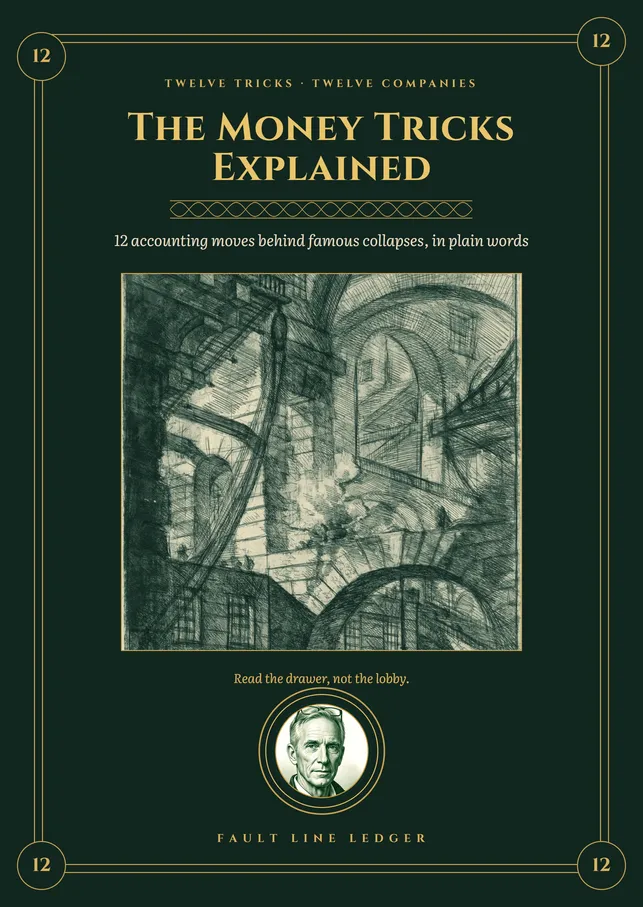
Cream paper, green ink and Piranesi's prison etchings for the part openers. Built to read on a phone or a laptop.
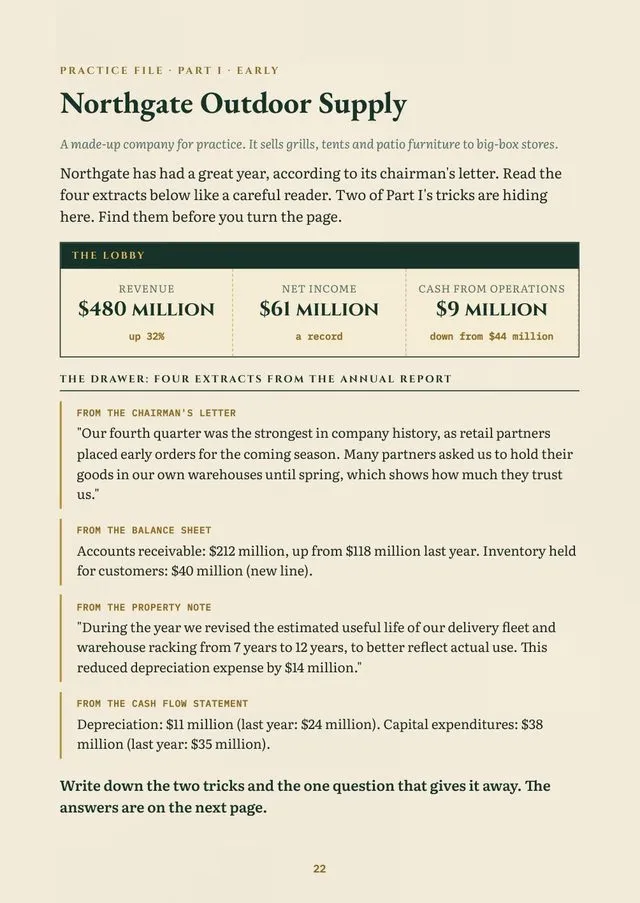
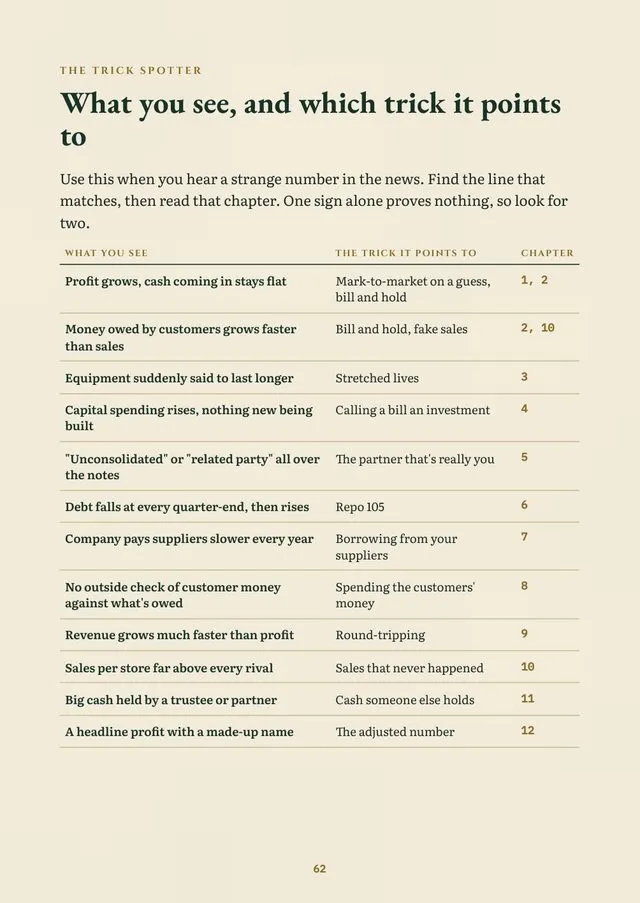
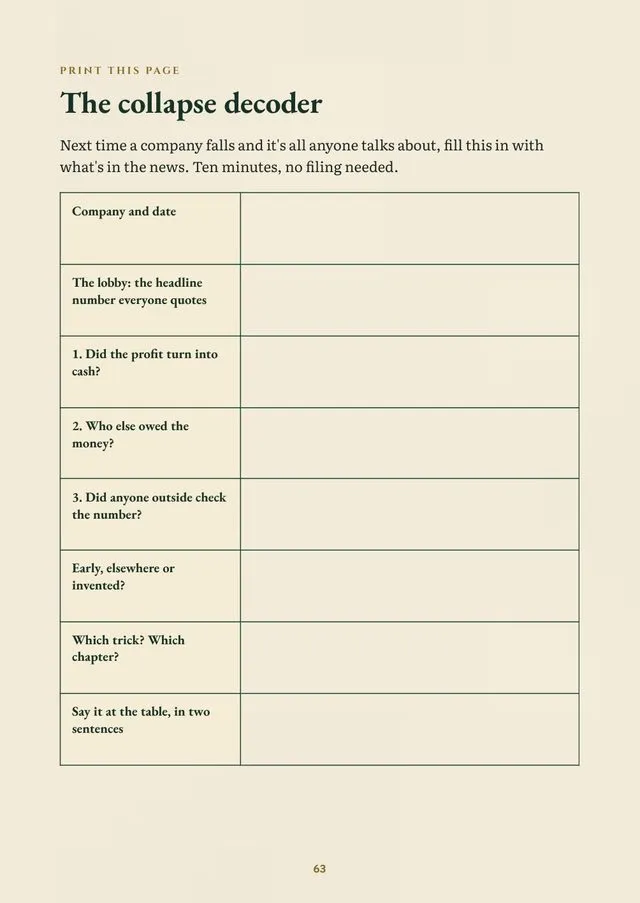
$27. Instant 69-page PDF. Secure checkout. All sales are final.

Who made this
I host Fault Line Ledger. I believe every collapse has a boring accounting reason under the loud story, and that anyone can follow a balance sheet if someone explains it plainly. This book is the long version of the part of each video people ask about most.
Facts and case outcomes were checked on November 15, 2026. Where someone was convicted, the book names the court. Where a case was settled without admitting anything, or a trial is still open, it says so.
Questions
No. Every trick starts with something you already know: a shares account, an electric bill, a coat check, a lemonade stand. The finance words come after, and there's a plain-words glossary at the back.
No, and nothing in it is investment advice. It explains how twelve real collapses happened and what each trick looks like from outside, so when a collapse hits the news you know what you're looking at.
The videos tell the story of a company. This book takes the one accounting move behind it and explains it slowly, with a worked example, a timeline, the second case where the same trick showed up, and practice files to test yourself. If you want the full story of each fall, that's Case Files Volume 1.
You download the PDF right after paying. It's laid out at a book page size that reads well on a phone, tablet or laptop, and the printable pages print on letter or A4.
All sales are final. This is a digital download you get right away, so we don't offer refunds. This doesn't affect any rights you have by law. The contents, the free lesson and six real pages are here so you can check before buying. Questions go to faultlineledger@awakeup.shop.
The next time a company falls
Twelve tricks, twelve companies, twelve dollar amounts, in plain words.
Instant 69-page PDF. Secure checkout. All sales are final.
First edition, checked November 15, 2026. Buyers get later editions free.

The full kit
Case Files Volume 1, the Red Flags Spreadsheet, both add-ons, plus a kit-only set of 20 filled-in spreadsheet walkthroughs that show the red flags in each Case Files company's own filings before the fall.
$67See the kit

Case Files Volume 1, The Money Tricks Explained, What Happened Next, the 12 Warning Signs and the How It Ended timeline posters, plus 5 case files on the collapses viewers asked for that come only in this kit.
$67See the kit

Research dossiers on 20 company collapses, each with the timeline, the key numbers, the turning point and the sources.
$17See it

A spreadsheet that walks you through a public company's filings on debt, cash burn and insider sales, with each check matched to the case where it mattered.
$37See it

A checklist of 12 warning signs, each tied to the real case, date and source where it appeared before the company went under.
FreeGet it free